Colorful Cross Stich-Style Flowers
A Designer’s First Look: Charm with Clear Intent
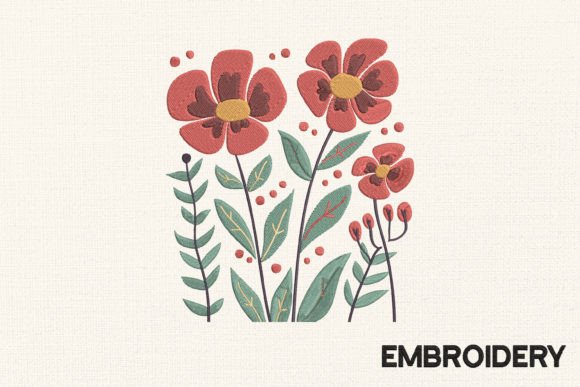
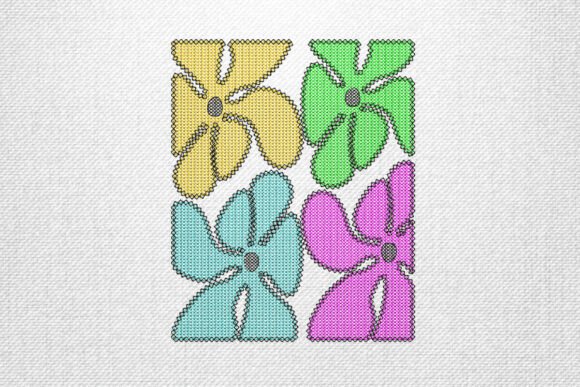
When I opened Colorful Cross Stich-Style Flowers for the first time, I didn’t just see a bouquet—I saw intention. The design leans into cross-stitch’s nostalgic warmth but translates it cleanly into machine embroidery language. It’s not overly fussy, not too literal, and avoids the “clip-art” flatness that plagues so many floral embroidery files. There’s rhythm in the petal placement, gentle asymmetry in the stems, and a light-hearted balance of fill stitch and running stitch that suggests hand-done charm without sacrificing stitch integrity. As a designer who regularly sources files for client work and small-batch merchandise, I immediately pictured this on a linen tea towel for a local boutique—or stitched onto the chest of a soft organic cotton baby onesie.
Where It Shines: Real Projects, Real Reactions
I tested Colorful Cross Stich-Style Flowers across three real-world applications: a canvas tote bag for a craft fair booth, a crewneck sweatshirt for a seasonal Etsy drop, and a set of kitchen towels for a wedding gift bundle. In each case, the design held up—not just technically, but emotionally. Customers paused at the tote bag. They smiled at the sweatshirt. They commented on how “fresh but familiar” the towels felt. That’s the quiet power of this file: it reads as handmade, even when stitched by machine. It doesn’t scream “embroidery”—it whispers “carefully made.”
For custom apparel, it works best on medium-weight fabrics with low stretch—think structured tees, brushed cotton sweatshirts, or midweight canvas. On a curved surface like a cap? I’d recommend scaling down slightly and using a tear-away + cut-away stabilizer combo to keep the cross-stitch texture crisp. As an embroidered patch, it holds shape beautifully when backed properly—ideal for aprons, denim jackets, or nursery decor pillows. And because the color blocking is intuitive (no micro-blends or gradient fills), it translates well to printable mockups and digital previews for your Etsy listings or wholesale pitch decks.
Where to Pause—and Why
This isn’t a one-size-fits-all file—and that’s a good thing. Its personality demands thoughtful pairing. On thin fabric like lightweight voile or rayon challis, the stitch density may cause puckering unless you reduce underlay or add lightweight fusible stabilizer behind the hoop. On dark fabric, especially charcoal or navy, double-check thread contrast: some of the lighter pastel tones in the design can fade visually unless you swap in higher-contrast threads (e.g., mint instead of pale sage). And while it reads well on textured surfaces like terry cloth towels, avoid placing it directly over thick seams or hems—those raised lines disrupt the clean line work of the cross-stitch motif.
It also doesn’t scale well below 3.5 inches wide. Below that, the inner details—like the subtle X-shaped accents in the flower centers—start to blur. So if you’re planning a tote bag design with multiple small motifs, or stitching onto a child’s cap, test that smaller size on scrap first. Likewise, avoid layering it over high-pile fleece or quilted blankets—the design needs a stable, relatively flat base to land its visual rhythm.
Design Notes Every Embroidery Professional Should Check
- Test on scrap fabric first—especially if you’re using non-standard thread brands or blending metallics.
- Review stitch density before hooping: dense fill areas should feel balanced, not heavy or stiff.
- Confirm hoop size compatibility with your machine—and whether the design fits comfortably within your standard hoop without trimming corners.
- Inspect small details like stem tips and petal edges in your embroidery software: no stray jump stitches, no overlapping outlines.
- Try black-and-white mockups to assess contrast and clarity—this reveals how readable the design stays across fabric types.
- Compare light and dark backgrounds side-by-side: what reads as cheerful on ivory may read as washed out on oatmeal.
- Use proper stabilizer—a medium-weight cut-away works best for apparel; tear-away + topping for towels.
- Verify licensing before selling finished items or bundling the digital embroidery file in craft kits—commercial use isn’t automatic.
Beyond Stitching: What This Design Says About Your Brand
When you choose Colorful Cross Stich-Style Flowers, you’re not just picking a motif—you’re choosing a tone. It signals approachability, craftsmanship, and quiet confidence. For a craft business, it elevates a simple tea towel from utilitarian to giftable. For an Etsy seller, it adds narrative weight to a listing—customers don’t just buy a pillow cover; they buy “a little garden stitched by hand.” And for a small shop product, it reinforces brand consistency without feeling repetitive: pair it with neutral linens, natural wood tags, and minimalist packaging, and it becomes part of a cohesive story.
That said, it won’t suit every brand voice. If your aesthetic leans hyper-minimalist, industrial, or ultra-modern, this design may feel too soft or nostalgic. But for makers who celebrate warmth, tactility, and intentional detail—especially those building a collection around Bouquets Bunches themes—it’s a reliable anchor piece. It works equally well as a standalone machine embroidery design or as part of a curated set with coordinating leaves, bees, or vintage-style labels.
Final Thought: A Design That Earns Its Place
Colorful Cross Stich-Style Flowers isn’t flashy—but it’s memorable. It doesn’t try to be everything; it’s simply excellent at being what it is: a joyful, stitch-smart interpretation of folk-inspired florals. Whether you’re stitching a personalized gift, prepping a batch of holiday embroidery for your shop, or sourcing dependable design assets for client projects, this file delivers consistent results without surprises. Just remember: great embroidery starts long before the needle drops. Read the file notes, test thoughtfully, and let the charm come through—not as decoration, but as intention made visible.