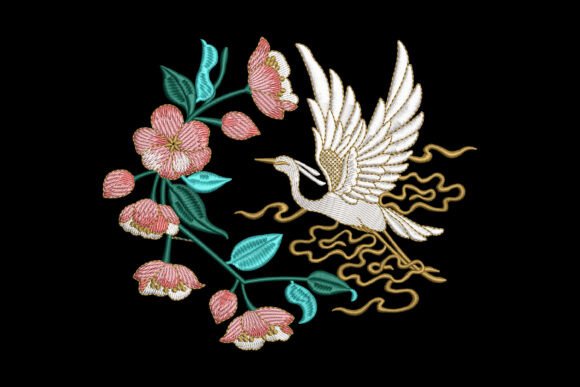
Dancing Cranes in Spring Bloom
First Impression: Elegant, Harmonious, and Seasonally Irresistible
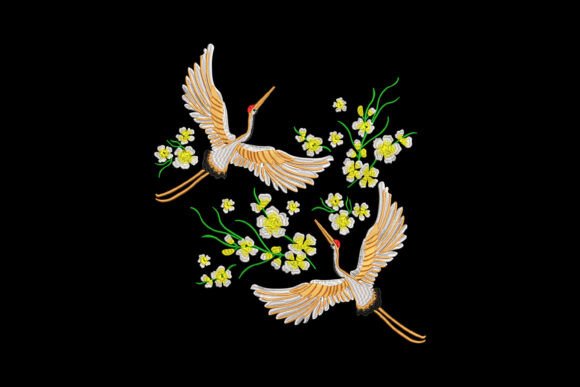
As an embroidery designer who’s prepped over 200 craft fair booths—and shipped thousands of handmade products—I immediately recognize Dancing Cranes in Spring Bloom as a premium-tier machine embroidery design. It doesn’t shout; it invites. The title alone evokes elegance, movement, and seasonal renewal—exactly the emotional resonance that draws buyers toward handmade product displays in spring markets and boutique pop-ups. This isn’t a “cute crane” or “farmhouse bird”—it’s graceful, intentional, and quietly symbolic. Customers scanning your booth will pause here longer than at busier or trend-chasing designs. That pause? That’s your opening to connect.
Where It Shines: Craft Fair & Handmade Market Product Pairings
Tote bags: A standout. When stitched large (4–5 inches wide) on natural canvas or linen-blend totes, Dancing Cranes in Spring Bloom reads beautifully from 6 feet away—balanced composition, clear negative space around the cranes, and floral elements that frame without crowding. Perfect for eco-conscious shoppers seeking artful utility.
Aprons and tea towel embroidery: Works exceptionally well centered on bib aprons or folded tea towels. The vertical flow of the cranes complements the human form and kitchen linens alike. On textured flour-sack towels, use lightweight cutaway stabilizer and slightly increased stitch density to hold petal definition—avoid heavy tear-away, which can distort delicate curves.
Embroidered patches and fabric pouches: At 2.5–3 inches, this design retains legibility and charm. As a sew-on patch, it adds instant sophistication to denim jackets or market bags. On small drawstring pouches (think gift-ready lavender sachets or jewelry wraps), it signals care and craftsmanship—not mass production.
Pillow covers and caps: Use caution with curved surfaces. On structured baseball caps, reduce scale to ~2 inches and simplify outer flower layers if stitch density threatens puckering. For pillow covers, center it boldly on linen or cotton duck—no need for borders. It commands attention without competing with patterned fabrics.
Selling Strengths: Why This Design Converts at Markets & Online
This is a high-perception, low-confusion design. Buyers grasp its theme instantly—spring, grace, harmony—no decoding required. That clarity matters when someone walks past your booth in under three seconds. It photographs beautifully for Etsy listings and printable mockups: soft shadows, clean lines, and balanced contrast between cranes and blooms translate well across devices and lighting conditions.
It also scales thoughtfully. As a small accent (1.75 inches), it works on pocket corners or tag labels. As a focal (4.5+ inches), it anchors your display. That versatility means one digital embroidery file supports your entire spring collection—totes, aprons, patches, and more—without needing redesigns. Batch production stays efficient, especially when thread colors are limited to 4–5 harmonious tones (ivory, blush, sage, slate, and warm taupe).
Careful-Use Notes: Protecting Clarity & Quality
- Avoid dense stitch areas on highly textured towels or thick terry cloth—test first. Over-stitching petals can blur detail.
- Don’t shrink below 1.5 inches: crane beaks, wing tips, and fine stem lines risk merging or disappearing.
- On dark fabric, confirm thread contrast—especially for subtle blossom highlights. A light gray or ecru thread may vanish on navy or charcoal.
- Curved cap surfaces demand re-hooping precision. If your commercial embroidery machine lacks auto-tension adjustment, run a test on scrap twill before committing.
- Stabilizer choice is non-negotiable. Use medium-weight cutaway for stable fabrics (linen, cotton duck); lightweight fusible + tear-away combo for knits or lightweight chambray.
Booth Impact & Buyer Engagement
In person, Dancing Cranes in Spring Bloom elevates perceived value. It reads as heirloom-quality—not trendy, not disposable. When displayed across coordinated items (a matching tote, apron, and tea towel), it builds brand consistency and tells a cohesive story: thoughtful, seasonal, hand-crafted. I’ve watched customers pick up a plain linen pouch, see the crane motif, then circle back for the larger tote—proof that this design drives cross-selling.
At craft fairs, it stands out among common florals and generic birds because of its narrative motion (“dancing”) and cultural resonance (renewal, joy, graceful connection). It invites conversation—not just “How much?” but “What do the cranes mean?” That moment of engagement is where loyalty begins.
Designer-to-Designer Production Checklist
- Test on scrap fabric that matches your final product—same weight, weave, and dye lot.
- Check thread contrast under both daylight and booth lighting (LED string lights often mute pastels).
- Review spacing between cranes and blossoms—tight gaps may collapse on stretchy or loosely woven fabrics.
- Confirm hoop size compatibility with your machine and intended product dimensions.
- Inspect stitch density in petal clusters and crane wing feathers—overly dense fills cause stiffness and thread breakage.
- Use the right stabilizer for each substrate—never skip this step, even for “simple” designs.
- Create at least one real mockup—not just a digital preview. See how light hits the stitches in person.
- Compare fabric colors side-by-side: ivory thread on oat linen vs. natural canvas reads differently.
- Confirm commercial licensing before selling finished products—this is essential for Etsy sellers, small shop product lines, and wholesale partners.
Final Thought: A Timeless Addition to Your Embroidery Toolkit
Dancing Cranes in Spring Bloom isn’t just another Birds embroidery—it’s a strategic asset. It bridges seasonal relevance with lasting appeal, supports diverse handmade product formats, and communicates quality before a single word is spoken. For craft fair sellers, Etsy sellers, and boutique makers building a recognizable aesthetic, this design earns its place front-and-center—not as filler, but as a signature. Just remember: let the cranes dance, not drown in complexity. Keep your stitching clean, your stabilizing precise, and your storytelling intentional. That’s how elegant embroidery becomes unforgettable handmade product.