Gilded Fir Cone: Elegant Forest Charm
First Impression: Timeless, Festive, and Quietly Luxe
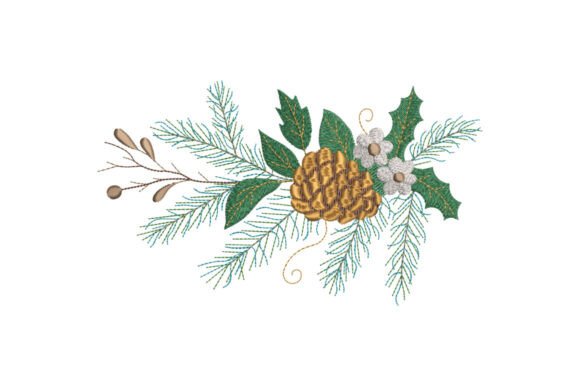
As an embroidery designer who’s prepped over 200 craft fair booths—from snowy mountain markets to sun-drenched urban pop-ups—I instantly recognize what Gilded Fir Cone delivers: quiet elegance with seasonal resonance. It’s not loud or cartoonish; it’s not minimalist or stark. Instead, it lands firmly in the premium rustic sweet spot—think heirloom tea towels at a boutique farmhouse shop, not glittery holiday sweaters at a big-box craft store. The gilded fir cone at its heart evokes prosperity and grounded warmth, while “delicate fir br[anches]” (as described) suggest fine detail and organic flow. That duality—rich symbolism paired with botanical softness—makes Gilded Fir Cone unusually versatile across product types and customer demographics.
Where It Shines on Craft Fair Products
On a crowded table full of handmade goods, visual hierarchy matters more than perfection. Here’s where Gilded Fir Cone earns its place:
- Tote bags & market bags: Centered on natural canvas or oat linen, it reads clearly from six feet away—neither too busy nor too sparse. The gilded center draws the eye without shouting.
- Aprons & tea towel embroidery: Positioned just above the pocket or centered on the lower third, it adds artisanal weight without overwhelming utility. Customers associate this kind of refined forest motif with care, craftsmanship, and kitchen ritual.
- Embroidered patches & small pouches: At 3–4 inches wide, Gilded Fir Cone holds detail beautifully. Its balanced composition avoids awkward cropping—and because it’s not text-heavy or linear, it scales down gracefully.
- Pillow covers & giftable handmade items: This is where its symbolic warmth pays off. Shoppers pause longer for pieces that feel intentional and meaningful—not just decorative, but curated. “Wealth and prosperity” resonates quietly during gift-giving seasons, especially when paired with neutral linens or wool-blend fabrics.
- Booth samples & printable mockups: It photographs exceptionally well under natural light—gilding catches subtle highlights, and delicate branches retain texture without pixelation. That makes it ideal for Etsy listings, Instagram carousels, and printed booth signage.
Practical Production Notes Every Embroiderer Should Know
Before loading your machine, test Gilded Fir Cone with intention—not just to see if it stitches, but to see how it performs:
- Stitch density matters. Gilded elements often mean dense satin or fill stitches—check for potential puckering on lightweight cotton or textured tea towels. Use cutaway stabilizer for structured items like tote bags; tear-away works well for softer aprons.
- Fabric texture changes everything. On terry cloth or heavy linen, fine branch details may soften. If selling embroidered tea towels, run a real sample—not just a digital preview—to confirm clarity.
- Hoop size & placement are strategic. Because the design centers on one strong focal point, it adapts easily to standard 4×4 or 5×7 hoops. But avoid placing it near curved seams (like cap crowns) unless you’ve tested hooping stability and thread tension.
- Thread contrast is non-negotiable. Gold metallic thread looks stunning—but only if your base fabric supports it. On dark fabric, ensure the gilded cone remains legible (not swallowed by shadow). Consider matte gold rayon for subtlety, or high-sheen polyester for impact.
- Small-scale clarity isn’t guaranteed. While Gilded Fir Cone holds up well at 3 inches, avoid shrinking it below 2 inches—tiny branch tips and gilding transitions may blur or stitch poorly on dense fabrics.
Why It Strengthens Your Brand & Booth Presence
In a sea of generic florals and trendy fonts, Gilded Fir Cone quietly signals sophistication and narrative depth. It fits naturally within the Forest Trees category—but stands apart through its symbolic layering and restrained execution. For Etsy sellers and small shop owners, that translates to higher perceived value, stronger repeat engagement (“I love your forest collection”), and easier brand consistency across product lines. On your craft fair table, it acts as a visual anchor: customers remember the golden shimmer against raw linen, the thoughtful spacing of branches, the way it feels both seasonal and timeless. That memory drives sales—not just of the item itself, but of your entire collection.
Designer-to-Designer Checklist Before Selling
Before cutting fabric or listing your first Gilded Fir Cone finished product, do these five things:
- Test the machine embroidery design on scrap fabric matching your target product—same weave, weight, and finish.
- Compare at least three thread color pairings (e.g., gold + sage, gold + charcoal, gold + cream) to see which best honors the design’s elegance.
- Review spacing between the cone and surrounding branches—tight spacing risks thread nesting; generous spacing maintains airiness and readability.
- Confirm commercial embroidery rights if selling finished products—this is a digital embroidery file, and licensing terms determine whether you can sell stitched goods at scale.
- Create one physical mockup you’d proudly display in your booth—not a screen print, not a PDF, but a real, stitched, finished piece you hold in your hands.
Final Thought: A Design That Sells Because It Feels Human
Gilded Fir Cone doesn’t rely on novelty or trend-chasing. It sells because it feels considered—like something made slowly, chosen carefully, and given meaning. That’s why it works equally well on a $28 embroidered patch and a $145 linen pillow cover. For craft fair sellers, handmade shop owners, and Etsy sellers building a loyal following, it’s more than a forest trees motif—it’s a quiet promise of quality, symbolism, and handmade integrity. Stitch it thoughtfully, present it intentionally, and watch how often shoppers pause, smile, and ask, “What does that mean?” That question? That’s where real connection—and real sales—begin.