Cherry Blossom: A Thoughtful Stitch for Real Projects
First Impressions: Charm Without Cliché
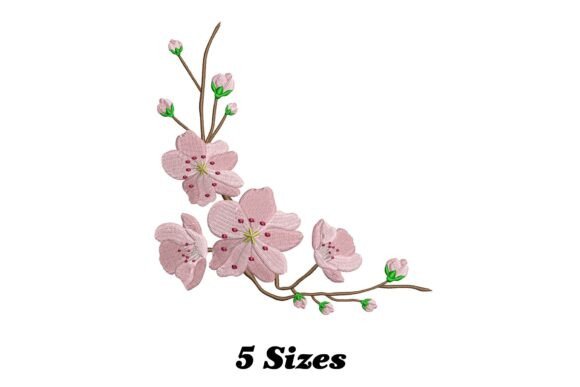
When I opened the Cherry Blossom embroidery file, I didn’t see another generic floral motif—I saw a design with quiet intention. It’s not overly fussy or botanical-accurate, but it carries the lightness and soft rhythm of spring in motion. The petals feel airy, not stiff; the stem has just enough curve to suggest growth, not rigidity. As a designer who regularly selects machine embroidery designs for client work and small-batch production, that balance matters. This isn’t a filler piece—it’s a personality anchor. It reads as friendly, feminine without being saccharine, and modern without losing warmth. That makes Cherry Blossom ideal for handmade products where authenticity and subtle storytelling matter—like a linen tea towel for a local café, or a baby onesie meant to feel tender, not trendy.
Real-Life Test: A Custom Tote Bag for a Local Bookstore
Last week, I used Cherry Blossom on a natural cotton canvas tote for a neighborhood bookstore’s spring launch. No applique design—just clean satin stitch petals and gentle fill stitch centers. The result? A design that looked hand-drawn, not digitized. Customers paused at the counter. One asked, “Did you draw that?” That’s the mark of a strong embroidery file: it doesn’t scream “machine-made.” It invites touch, invites connection. On that medium-weight fabric, Cherry Blossom held its shape beautifully—no puckering, no thread breakage—even with moderate stitch density. It wasn’t too dense to drape softly, nor so sparse that it looked unfinished.
Where It Shines (and Where to Pause)
Cherry Blossom works especially well for:
- Custom apparel: Sweatshirt embroidery on midweight fleece? Yes—its open layout avoids bulk. T-shirt embroidery on 100% cotton jersey? Also yes—with light cutaway stabilizer and a slow-stitch test run.
- Home textiles: Tea towels, pillow covers, and aprons benefit from its scale and simplicity. It reads clearly at 3–4 inches wide, making it versatile across hoop sizes.
- Personalized gifts: Pair it with a monogram or short name in a clean sans-serif running stitch, and you’ve got a wedding gift or baby embroidery set that feels curated—not assembled.
- Etsy seller assets: As a digital embroidery file, Cherry Blossom supports strong printable mockups. Its silhouette is distinct enough to stand out in thumbnail views, and its Single Flowers Plants category fits cleanly into seasonal collections (spring launches, Mother’s Day bundles, nursery decor sets).
But here’s where attention matters:
- Thin or stretchy fabric: On lightweight rayon or heavily knitted fabric, skip the satin stitch-heavy version unless you reinforce with tear-away + wash-away stabilizer combo.
- Dark fabric backgrounds: The delicate petal edges can blur if thread color contrast is low. Test in black and white mockups first—and consider slightly heavier outline stitches if selling finished products where clarity affects perceived value.
- Caps and curved surfaces: While charming on flat items, the asymmetry of Cherry Blossom needs careful placement on caps. Avoid stitching near the bill seam or crown curve unless you’re confident in your hooping technique.
- Frequent-wash items: For baby embroidery or kitchen towels, confirm the stitch density allows for flexibility—tight fills may crack after repeated laundering. A quick tug-test on your sample helps.
Design Integrity Meets Commercial Sense
As someone who sells both finished embroidered patches and digital embroidery files, I judge designs like Cherry Blossom by two things: how they hold up *in hand*, and how they perform *in context*. In hand? The curves flow, the negative space breathes, and the overall weight feels balanced—not top-heavy or lopsided. In context? It elevates a plain tote bag into a boutique product. It adds quiet sophistication to a child’s nursery decor without overwhelming the space. And for an Etsy seller listing holiday embroidery, it offers a non-traditional spring option that still feels giftable and meaningful.
That kind of versatility builds customer trust. When buyers see consistent quality—whether in a sweatshirt embroidery or a personalized gift—they begin associating your brand with care, not convenience. And for craft business owners, that perception directly impacts pricing power, repeat orders, and word-of-mouth referrals.
Practical Designer Notes Before You Stitch
Before adding Cherry Blossom to your next project—or your shop inventory—here’s what I always do:
- Test on scrap fabric first, using the exact stabilizer and thread colors you plan to use. Even “cool” designs can behave differently on textured fabrics like terry cloth or bouclé.
- Review stitch density in your editing software. If it’s over 12,000 stitches for a 4-inch version, consider simplifying minor details for baby embroidery or thin-fabric applications.
- Confirm hoop size compatibility. Does it fit comfortably in a 4x4 hoop? Or does it push the edge—requiring re-hooping for larger versions? That changes production time and consistency.
- Inspect small details under zoom: Are petal tips sharp or frayed-looking? Does the center detail read clearly at 2 inches wide? These affect professionalism in finished product photos.
- Check licensing. Since this is a machine embroidery design intended for commercial embroidery and digital resale, verify whether the license permits selling physical items *and* digital embroidery files. Don’t assume.
- Use proper stabilizer—especially for home decor items like pillow covers or blankets where drape and durability are expected.
A Design That Grows With Your Work
Cherry Blossom isn’t just another floral embroidery file. It’s a quiet collaborator—supporting your voice as a designer, reinforcing your brand’s sincerity as a small shop owner, and deepening the emotional resonance of every personalized gift you make. Whether you’re stitching it onto a linen napkin for a bridal shower or bundling it into a spring-themed digital embroidery pack for fellow crafters, it holds space without demanding attention. And in today’s market—where handmade product buyers seek meaning over mass appeal—that’s not just practical. It’s essential.